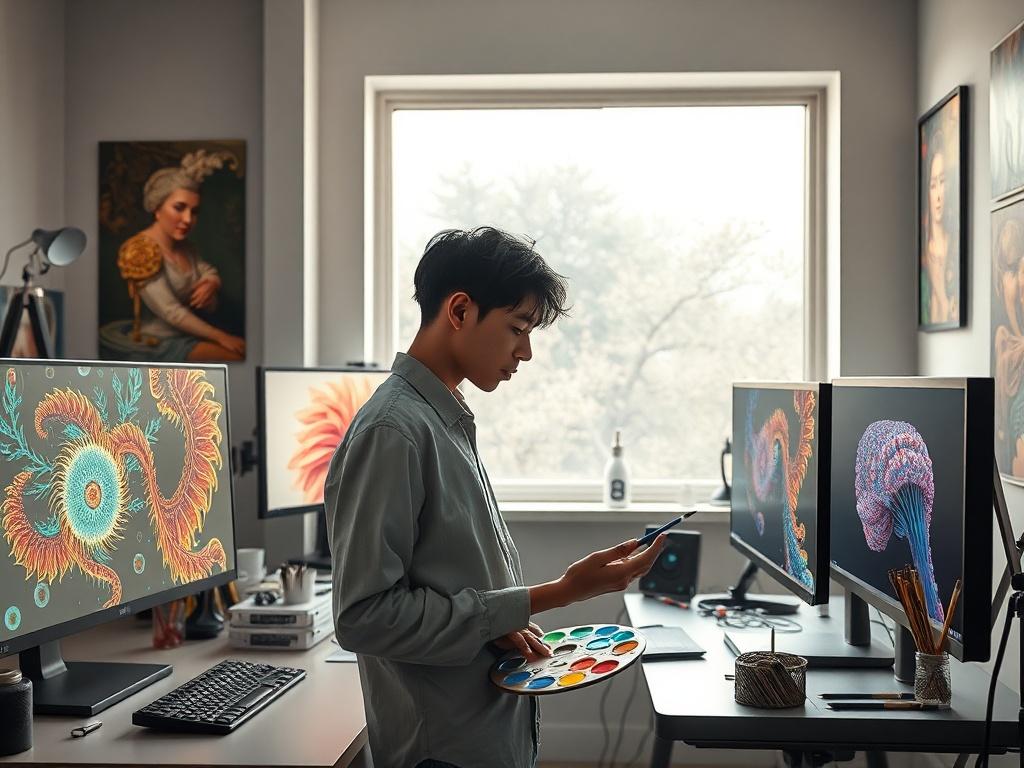
As the world embraces technological advancements, the intersection of artificial intelligence and fine art has sparked a revolution in creativity and expression. Artists and innovators are harnessing AI tools to explore uncharted territories, transforming the fine art landscape into a dynamic space where traditional techniques blend seamlessly with cutting-edge algorithms. This fusion has opened doors for unprecedented artistic possibilities, enabling creators to push the boundaries of imagination and redefine what art can be.
In this blog post, we will delve into the various ways AI is reshaping the art world. From generating stunning visuals to enhancing the creative process, we invite you to explore how AI is transforming the fine art landscape. We will also discuss the implications of this evolution, considering the future of fine art as artists begin to embrace AI as a collaborative partner, paving the way for a new era of artistic expression.
Exploring the transformative impact of AI on the fine art landscape
The integration of artificial intelligence into the fine art world marks a pivotal shift in how artists create and audiences experience art. AI is changing the rules of engagement, providing new tools that expand the boundaries of imagination. Artists now harness algorithms and machine learning techniques to generate mesmerizing visuals, blurring the lines between human and machine-made art. This fusion of technology and creativity invites a fresh wave of artistic expression, challenging traditional notions of authorship and originality. As the art community grapples with these changes, it becomes evident that AI is not merely a tool but a catalyst for innovation.
Additionally, AI's impact on the fine art landscape extends beyond the studio. Art collectors and enthusiasts experience this transformation through dynamic installations and personalized art curation. Algorithms sift through vast datasets, matching audiences with pieces that resonate with their tastes and emotions. This democratization of art allows for a deeper, more interactive relationship between the artist, the artwork, and the viewer. As AI continues to evolve, its influence on artistic practices and audience engagement will likely redefine our understanding of what fine art can achieve.
How AI is revolutionizing creativity and artistic expression
AI is dramatically reshaping the way artists create by providing innovative tools that enhance the creative process. Artists now use algorithms and machine learning to generate artwork, producing works that often challenge traditional notions of creativity. These technologies offer fresh perspectives and unique styles, allowing artists to push boundaries and explore concepts that were previously unimaginable. As AI analyzes vast datasets of existing artworks, it helps artists discover new patterns, styles, and techniques, enabling them to evolve their practice and create art that resonates with contemporary audiences.
Moreover, collaborations between human artists and AI are producing compelling outcomes that highlight the strengths of both. For instance, artists can use AI-generated drafts as a foundation, adding their personal touch and emotional depth to the final piece. This fusion of human insight and machine-generated creativity fosters an environment where art becomes a shared space for exploration and experimentation. As AI continues to evolve, it encourages artistic expression that is more inclusive and diverse, enabling a broader range of voices and ideas to emerge in the fine art world. Ultimately, AI stands as a catalyst for innovation, inviting artists to redefine their craft and expand the horizons of their creative potential.
The future of fine art: Embracing AI as a creative partner
As we look ahead, the integration of AI into the fine art world offers exciting possibilities for artists and art enthusiasts alike. Many creators now see AI not as a rival but as a collaborative tool that enhances their artistic process. By combining human intuition and emotional depth with AI's analytical capabilities and data processing power, artists can push the boundaries of their work. This partnership enables the exploration of new styles, techniques, and concepts, resulting in artworks that might not have been possible through traditional means. AI can help generate ideas, refine techniques, and even create intricate designs, pushing artists to innovate and experiment in ways they never thought possible.
Moreover, embracing AI in the art community fosters inclusivity and diversity in artistic expressions. With AI tools readily available, artists who may have felt limited by traditional methods can bring their unique visions to life, democratizing the creative process. This shift invites a broader range of voices and perspectives into the fine art landscape, enriching the cultural dialogue and inspiring new movements. As contemporary art continues to evolve, the collaboration between human creativity and artificial intelligence will undoubtedly shape the future of fine art, challenging preconceived notions and expanding our understanding of what art can be.

©2026 AIART Publishing™ · Digitograph™ · All Rights Reserved